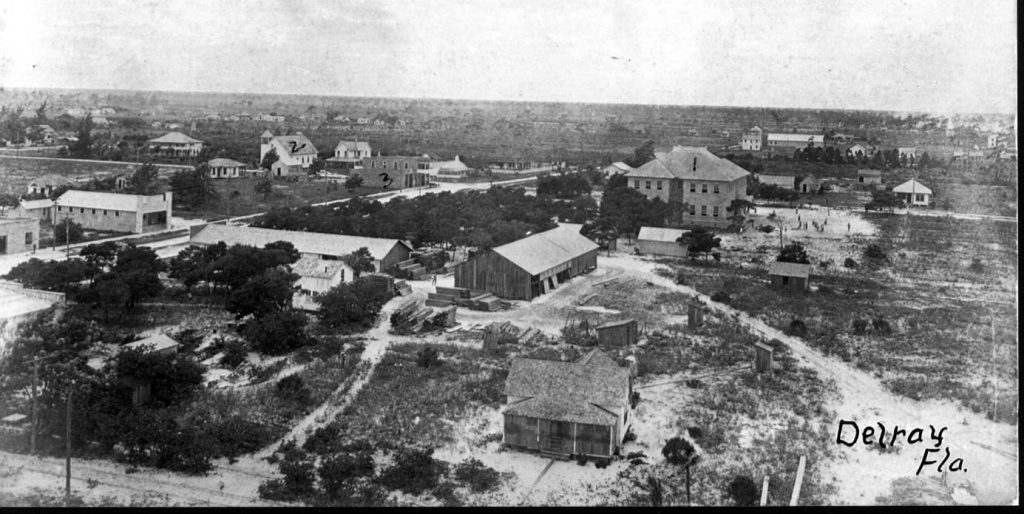
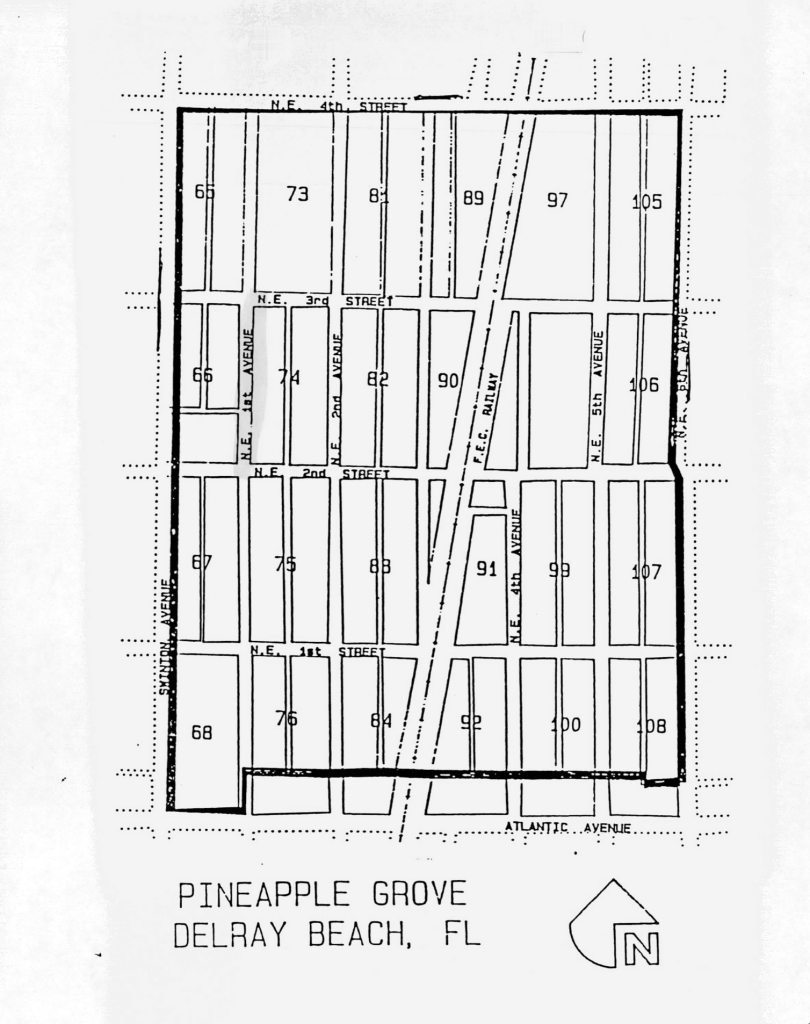
Within the Old School Square Historic Arts District, just northeast of the Delray Beach Historical Society campus, sits Banker’s Row. The unique block is comprised of grand Mediterranean Revival style homes on the west side of the street and picturesque Craftsman cottages on the east side. In addition to highlighting the extravagance of the 1920s and thrifty ingenuity of the 1930s, Banker’s Row provides an insight into Delray Beach during these decades and examples of adaptive reuse for long-term preservation.
History
As early as 1919, the Florida real estate market began to boom. By 1923, South Florida, in particular, became a hotspot for unprecedent inflation in land sales and new construction. Historians often note several contributing factors for the Land Boom: greater reliance on automobiles, extensive road building, climate, and lack of income or inheritance tax. After World War I, people also sought an escape from growing industrialization, driving people to new and underdeveloped places.
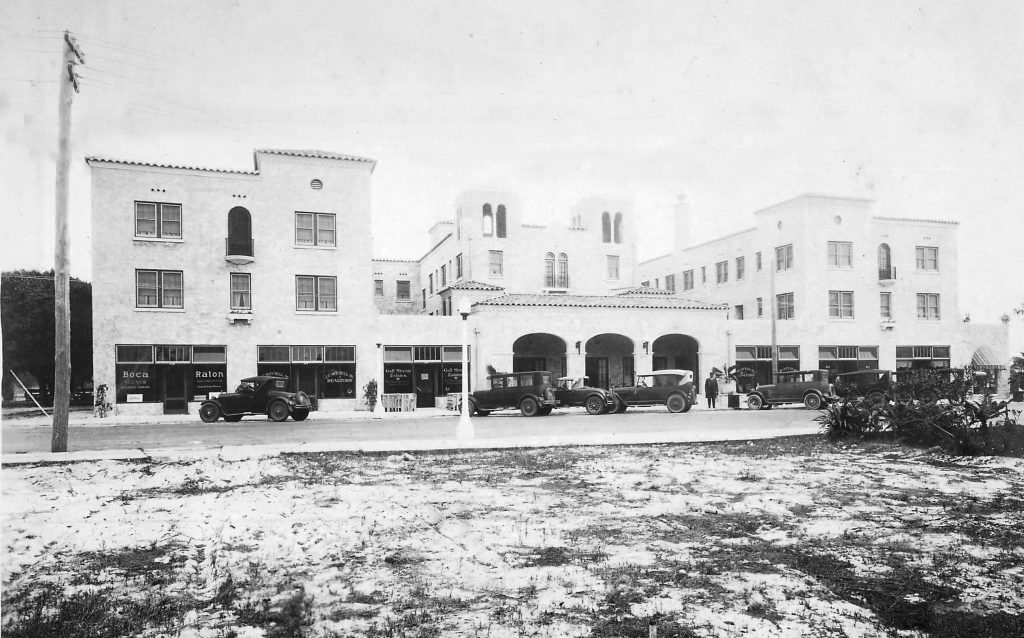
The Delray News, first published in 1923 amidst the land boom, featured full page advertisements for new construction projects, developments, and subdivisions throughout Delray. This included Dell Park, Del-Ida Park, Delray Shores, Vista Grande, Rio Del-Ray, and more. Many of Delray’s pioneers, who owned significant portions of land, became involved with the real estate industry, such as Adolf Hofman, Henry Sterling, and John S. Sundy.
West Side – Block 66
In 1924, Sundy sold Block 66 to prominent Delray businessman J.C. Keen. Not only was Keen proprietor of the East Coast Produce Company, but he was also Vice President of the Ocean City Lumber Co., member of the Delray City Council, and a Director of the Bank of Delray. Although Keen initially considered turning the land into a subdivision, he decided to sell lots individually to other wealthy businessmen, thus inspiring the name “Banker’s Row.”
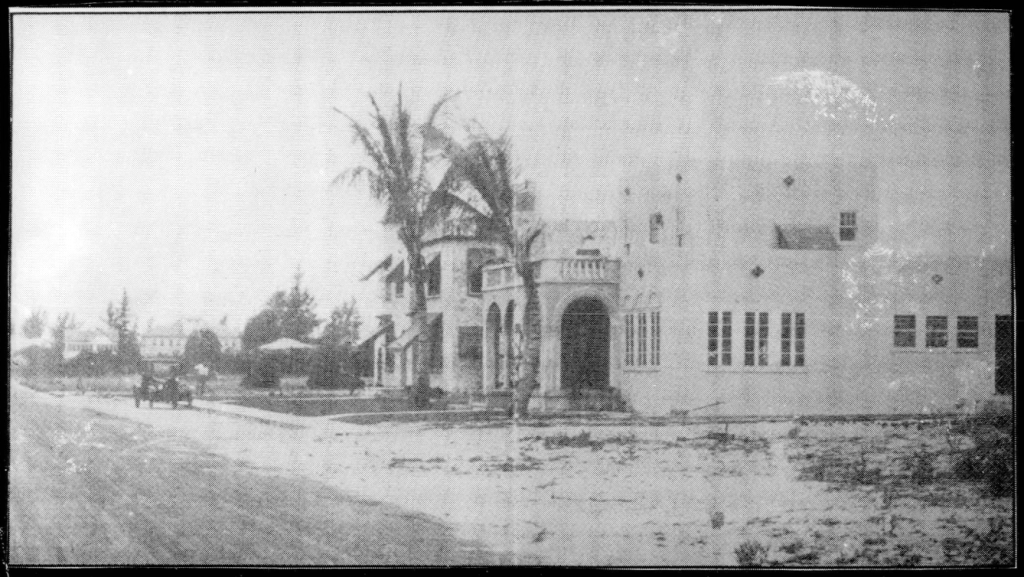
Keen sold the first lot to building contractor Leslie H. Walker in December 1924. The home was completed in 1926 and was described as a “beautiful Spanish type house… designed and built by its owner, at a cost of $15,000 [$272,558 in 2026]. It has five rooms on the first floor, and a sleeping room with windows on four sides, and bath on [the] second floor. There are two porches fourteen feet wide with mosaic tile floors. The interior is the work of an accomplished artist.”
Keen sold a corner lot to Matt Gracey in 1925. At the time, Gracey owned a major real estate firm and was responsible for developing many communities such as Lake View Heights, Ocean Breeze Estate, and Waterway Lane. Gracey also served on the Delray Realty Board of Governors and the City Council. Also in 1925, lawyer C.Y. Byrd purchased a lot from Keen.
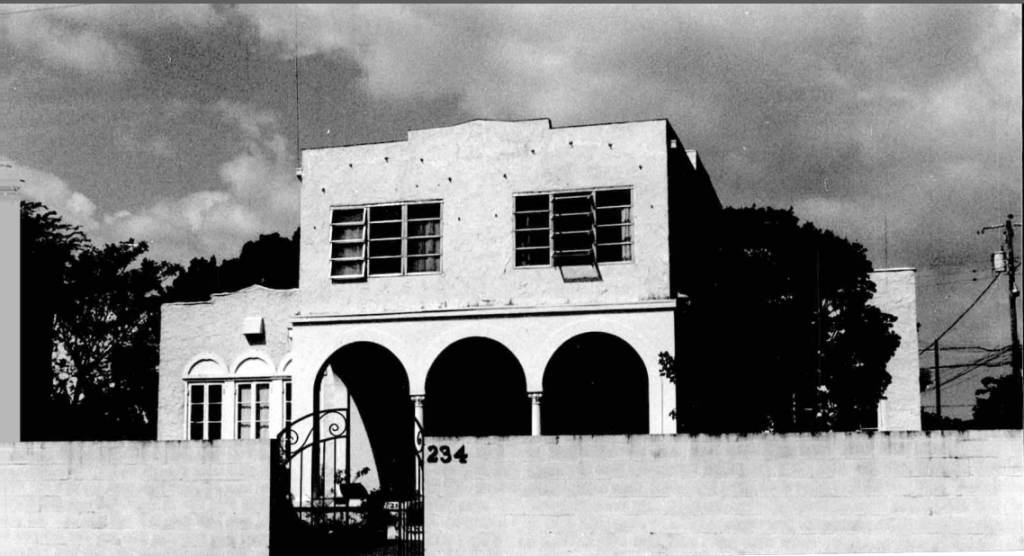
Vice President of the Delray Bank and Trust Company, A.G. Evans, purchased a lot in 1926. Evans was a popular figure around Delray, evidenced by a glowing review of his character in the Delray News: “Delray has not a better citizen within her limits than Mr. A.G. Evans, cashier of the Bank of Delray. Thoroughly progressive, always for any and everything calculated to improve and build upon his town and section, cheerfully giving sound business advice to all who seek his judgement and a good, clean Christian gentleman Aubry Evans is a man who is a great credit to his town…”
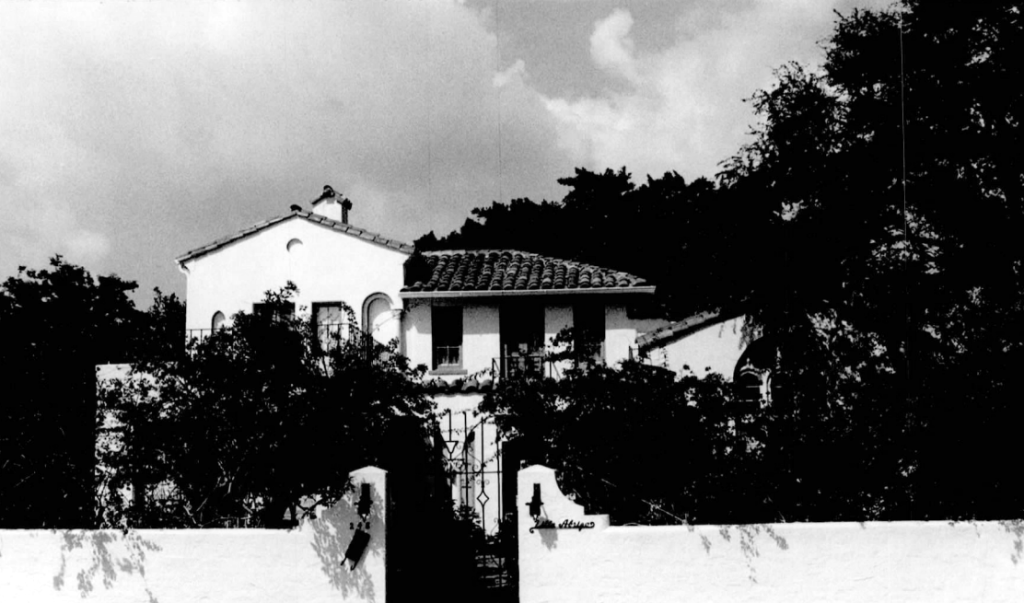
The Gracey house, also done in the Mediterranean Revival style, was designed on July 7, 1925, by Samuel Ogren Sr., the first nationally registered architect in Delray. Ogren also designed the Evans house.
East Side – Block 74
In 1938, Frank E. Mackle Sr., a real estate developer, purchased thirteen lots on Northeast First Avenue for his sons – Frank Jr. and Elliott Mackle – to develop and sell. In October 1938, the City issued twenty building permits to Frank Mackle for eleven main houses and nine guest cottages. The Delray Beach News reported the permits and announced, “all homes will be of frame construction and will cost $3,000 each,” or $70,025 today. Miami-based architects Phineas Paist and Harold Steward designed the houses. Interestingly, Harold Steward would later become Frank Mackle Jr.’s father-in-law.
The mortgages were insured through the Federal Housing Administration, a federal agency created through the National Housing Act of 1934. By December 1938, the Mackle Company constructed 20 new bungalows on Northeast First and Northeast Second Avenues. The Mackles sold their first home in January 1939, and the development was entirely sold out by the end of February. Architectural Forum even featured one of the Delray houses.
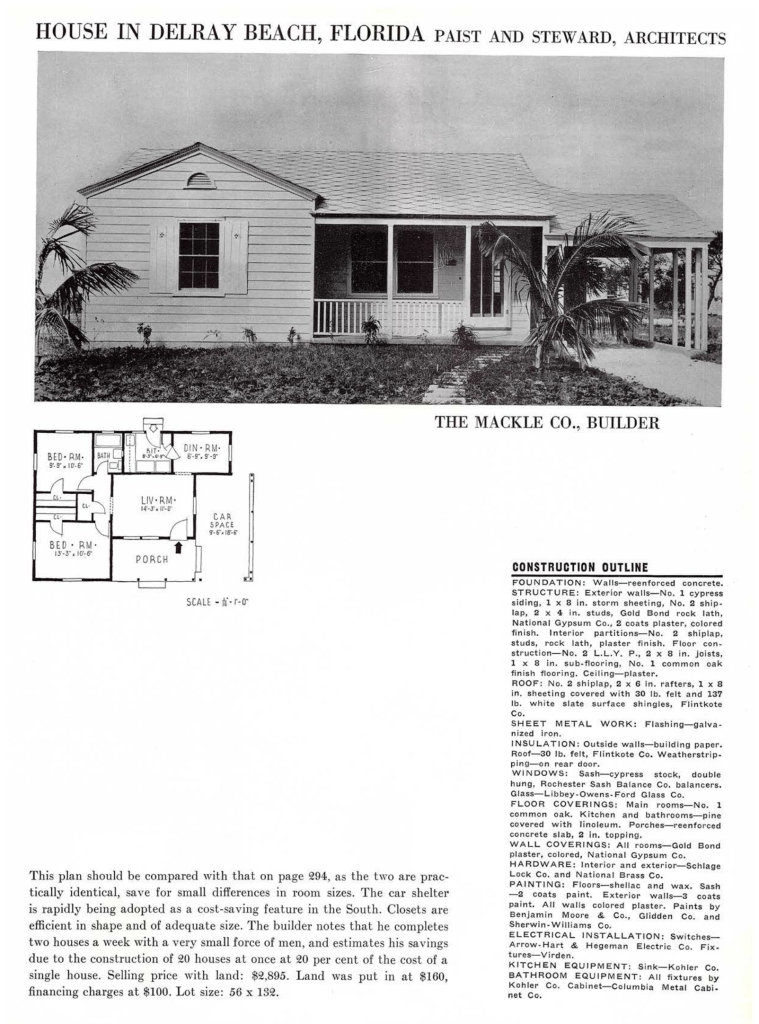
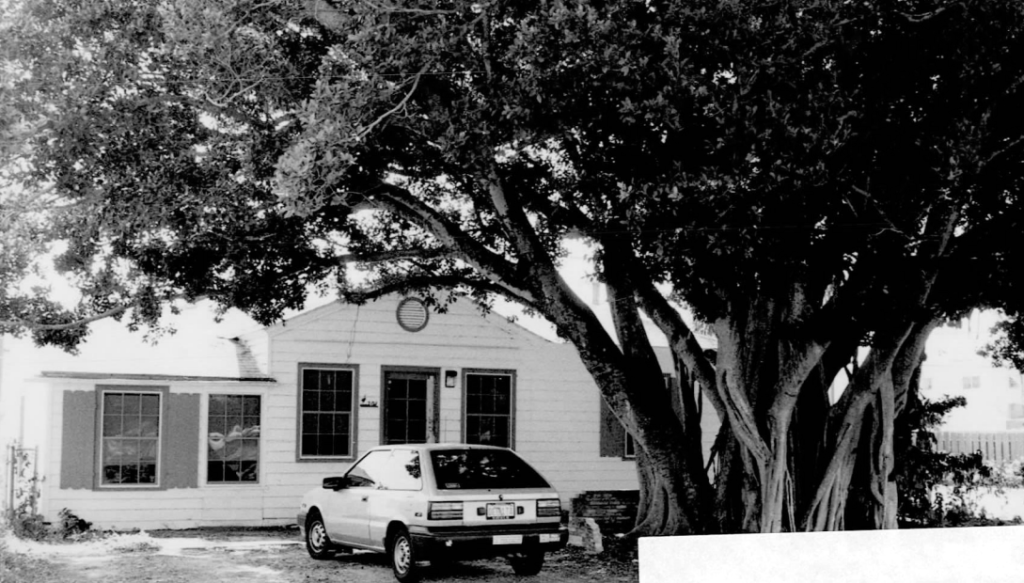
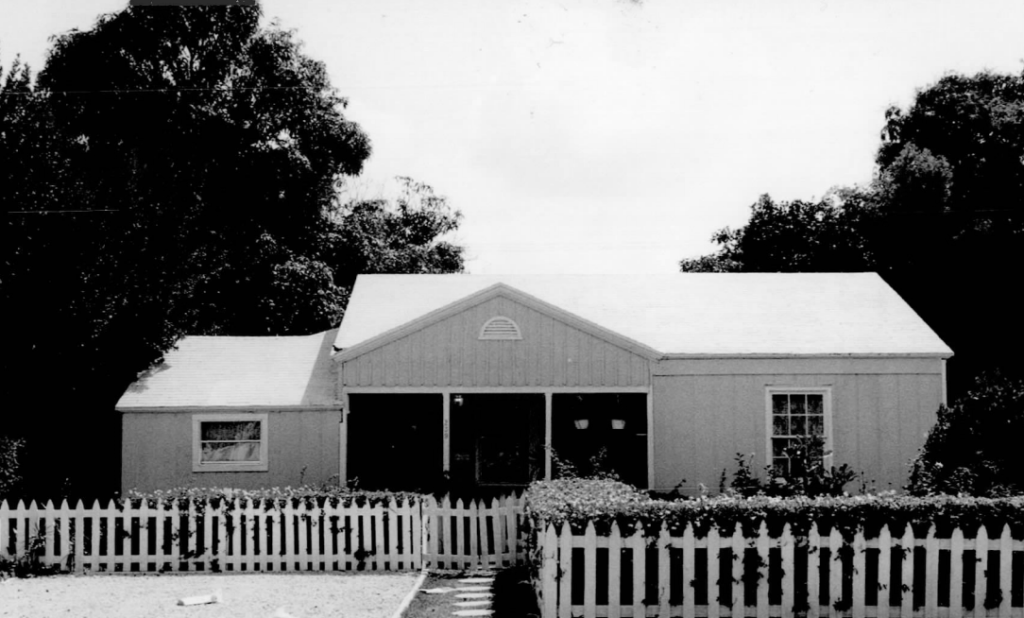
The Mackle Company built their homes simultaneously, not unlike Levitt & Sons in their infamous suburban community, Levittown, New York. Construction crews moved from house to house, performing one specific task, such as laying foundations, framing, or installing appliances, to build the homes efficiently and affordably. Although Paist & Steward made each of the houses slightly different, each home generally featured a gable roof, white wood siding, wood shutters, open front porches, wood screen doors, and a garage with a wooden door.
The first homeowners included artist Aaron T. Smock, music store owner Russell E. Ault, druggist J.L. Patterson, and accountant Harry J. Morgan, as well as Clarence F. Etheridge, Frank W. Stanley, Howard L. Cromer, Goldia Hodges, Katherine S. Gay, R.C. Keen, and Archer J. Adams. Adams owned the first Chevrolet dealership in Delray Beach, located on Southeast Sixth Avenue in a Miami Modern building designed by Samuel Ogren in 1949.
While this was the Mackles’ first foray into creating mass, standardized developments, it would certainly not their last. Following the post-war land and population boom, the Mackle Company (later known as the General Development Corporation) created several notable communities throughout Florida, including Key Biscayne, Port St. Lucie, Port Charlotte, Palm Bay, Port John, Vero Beach Highlands, Deltona, and Marco Island.
New Residents and Adaptive Reuse
In the 1940s, many Banker’s Row homeowners modified their houses by enclosing their garages or car ports to create additional living space. They often rented those new spaces to civilian employees and soldiers from the nearby Boca Raton Army Air Field, helping to ease a critical housing shortage. The houses also served as a hub for Delray Beach’s cartoonist community during the winter social season. Wood Cowan, the creator of Major Hoople, lived in No. 211 during the 1939 season. Jim Raymond, the cartoonist behind famous comic strip Blondie, lived and worked on Banker’s Row in the Gracey House at No. 248. In the late 1940s, Elizabeth and William Gearhart opened the Gearhart Day School at their home at No. 238. Classes were held in the main house and the two-story garage served as the kindergarten until the early 1960s.
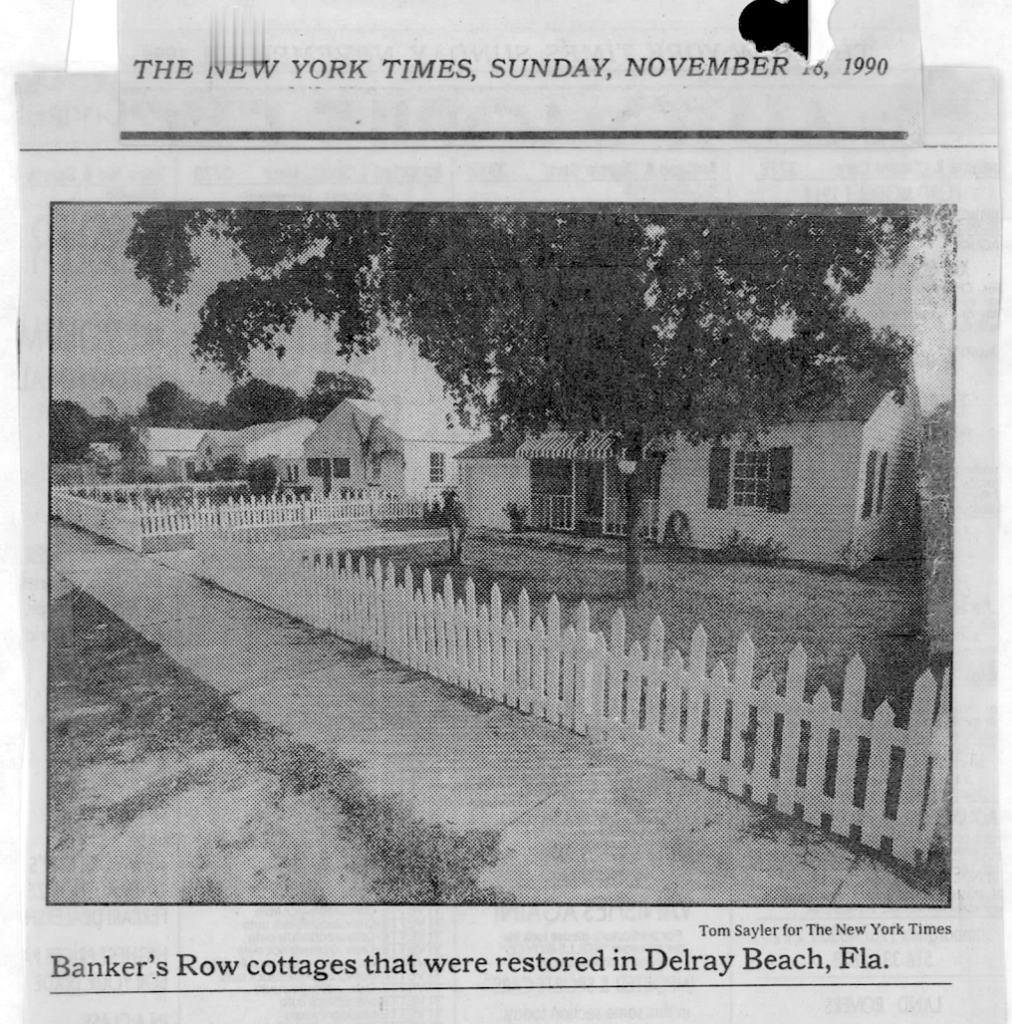
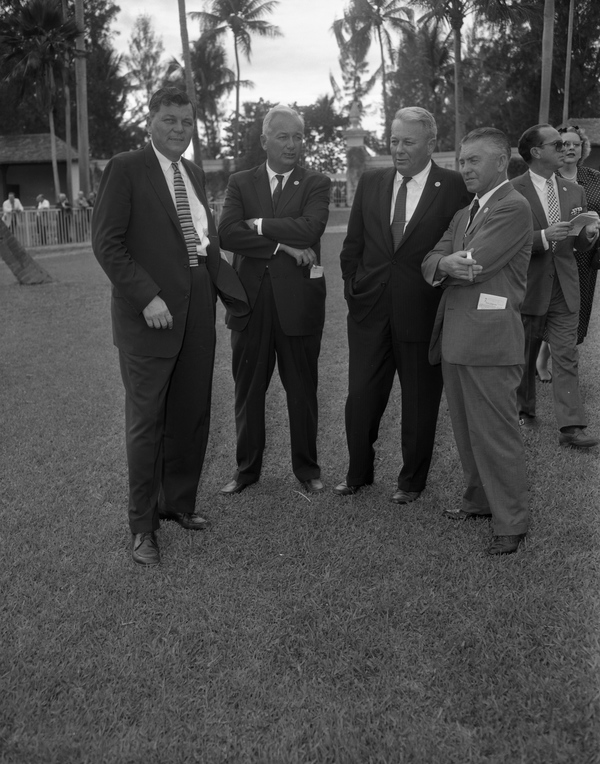
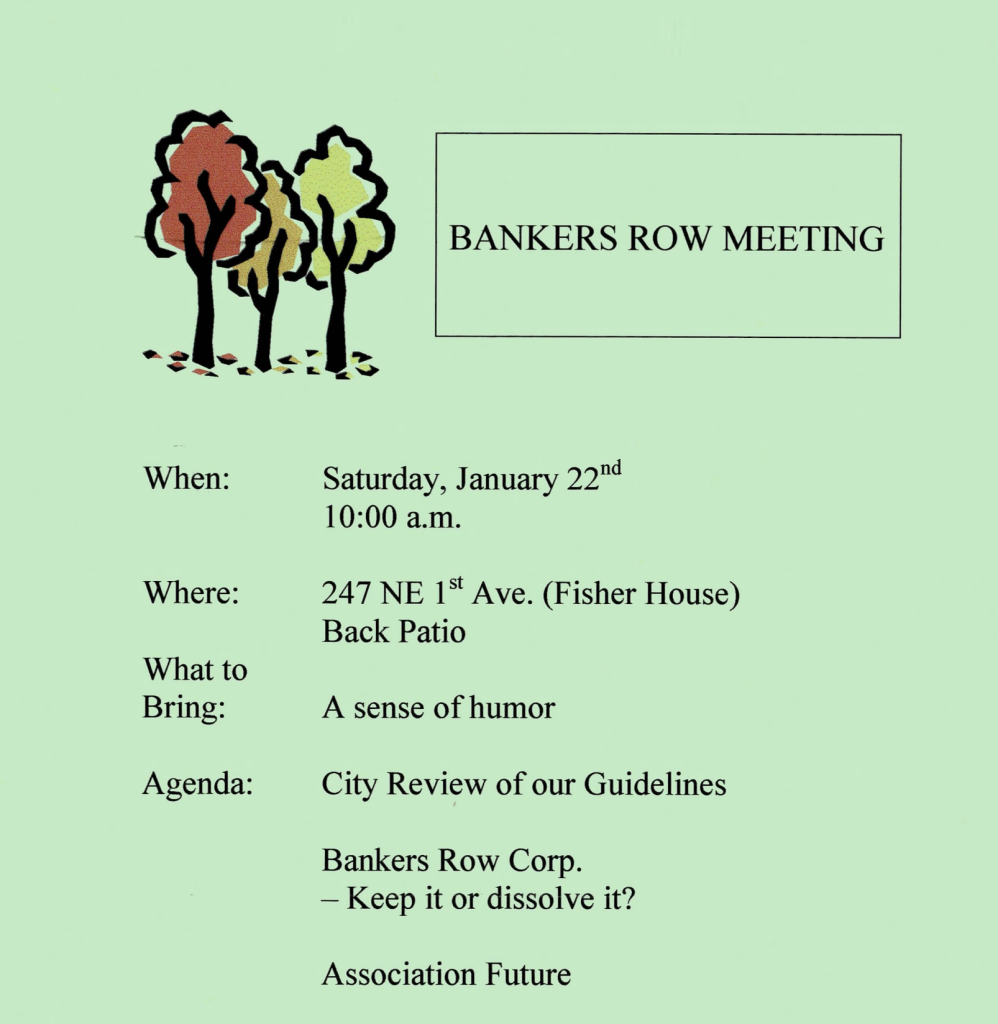
In 1991, the Banker’s Row Project sought to create a historic streetscape, mitigate traffic and safety concerns, and introduce Florida native and Florida friendly plants to the neighborhood. The group also applied for a State Planning Grant to restore the block. They received letters of support from Mayor Tom Lynch, Frances Bourque, Digby Bridges, Lula Butler, Kathi Sumrall, and Frank Mackle Jr.
Today, the neighborhood contains a mixture of residential homes and vacation rentals, as well as commercial properties like a med spa and law office. Most importantly, the neighborhood reflects Delray Beach’s rich history. The next time you take a stroll downtown (or park in the Banker’s Row lot), take a walk down Banker’s Row and admire the efforts of Florida’s architectural pioneers and preservationists.